
No Public Warrant List Online, So Start With a Call
There is no official Alcorn County website that lets the public type in a name and pull up a live list of active warrants. The Sheriff page, the court pages, and the correctional facility site do not host a warrant lookup tool. Any site that claims to show every Alcorn County warrant is an unofficial aggregator, and those can be stale, wrong, or mixed up between people who share a name. The safe path is to go straight to the agencies that create and hold warrants.
Warrants in the county come from more than one place. The Circuit Court handles felony cases and can sign arrest warrants, bench warrants, and capias orders. The Justice Court and the Corinth Municipal Court issue many misdemeanor, traffic, and failure-to-appear warrants. The Chancery Court can flag a bench warrant or capias in equity and family matters. The sheriff serves these warrants and logs each one in the jail docket. Because the trail is split across these offices, a phone call to the right desk beats any guess made from a free website.
A warrant begins when an officer or a citizen brings a sworn complaint and a judge finds probable cause. The judge signs the order, and it enters the file of whichever court holds the case. From there the sheriff is the agency that serves it and records it. This is why two offices, the court and the sheriff, each hold a piece of every warrant, and why a single free site can never be the full picture.
Important: Do not rely on unofficial warrant databases. Confirm any warrant by calling the issuing court or the Alcorn County Sheriff directly, since only those offices hold the current, accurate record.
The Fallback Chain for a Warrant Check
When there is no online search, work through these channels in order. Each step covers a different court or system, so a warrant that one office cannot find may turn up at the next. Give the office the full legal name and a date of birth so the clerk can match the right file. A warrant tied to a traffic ticket sits with the Justice Court or the city court, while a warrant from a grand jury indictment sits with the Circuit Clerk.
- Call the Sheriff first. The Alcorn County Sheriff, Ben Caldwell, is based at 2833 South Harper Road, Corinth, MS 38834, and the main line is 662-286-5521. The sheriff serves warrants and keeps the jail docket, so this office can confirm whether a person is in custody or has a warrant on file. The correctional facility lines 662-286-7194, 662-286-7195, and 662-286-7085 handle custody questions, not legal advice.
- Then call the court that issued the warrant. For Circuit Court felony files and lower-court appeals, reach the Circuit Clerk at 662-286-7740. For Justice Court bench, misdemeanor, and traffic warrants, call 662-286-7777. For Corinth city bench warrants and ordinance matters, call the Corinth Municipal Court at 662-286-2236. For a bench warrant or capias flag in a Chancery (family or estate) case, contact the Chancery Clerk.
- Check the case in MEC or PAMEC. If the underlying case is registered in Mississippi Electronic Courts, a logged-in user can view docket entries through the public access system, PAMEC. Chancery dockets can show entries such as Bench Warrant Issued, Bench Warrant Returned, and Capias Pending.
- File a public-records request. If a phone call does not resolve it, request the non-confidential warrant or jail docket information in writing from the sheriff or from the court clerk that issued the warrant, subject to legal exemptions and safety limits.
Types of Warrants in Alcorn County
Knowing the kind of warrant points you to the right office and tells you what the court will likely want next. Bond, surrender, and payment rules differ by warrant type, so the label matters. The table below sorts the common warrants and shows where each one usually comes from.
| Warrant Type | What It Is | Where It Usually Comes From |
|---|---|---|
| Arrest warrant | A judge's order, based on probable cause, to take a named person into custody for a charged offense. | Circuit, Justice, or Corinth Municipal Court |
| Bench warrant | An order a judge issues from the bench when a person disobeys a court order or fails to appear as required. | Any court; often Circuit or Chancery |
| Capias | A "take the body" order to bring a defendant before the court, often after an indictment or a missed setting. | Circuit Court and Chancery Court |
| Failure to appear or failure to pay | A bench warrant for missing a hearing or not paying fines, fees, or court costs. | Justice Court and Corinth Municipal Court |
What the Sheriff Jail Docket Records
By statute, the Alcorn County Sheriff keeps a jail docket that documents each warrant and the basis for holding a person. This docket is the closest thing the county has to a master warrant and custody log, and its fields tell you what a confirmed warrant record contains. A request to the sheriff for non-confidential information generally draws on the items below.
- Name of the person named in the warrant
- The writ or warrant itself
- Reason the person was placed in jail
- Nature of the writ or warrant
- Issuing authority, meaning the judge or court that signed it
- Date and time of the arrest
- Date and time the writ or warrant was issued
- Crime committed
- Authority for the confinement
A bond amount or a court disposition can also attach to a warrant once a judge sets one, though that figure lives with the court rather than on the sheriff's intake log. When you call, ask the court clerk whether a bond has been set, because that number controls how a surrender or a release will work.
The sheriff's role here grows out of the office's statutory duties, which include keeping the jail and the jail docket. Those duties are summarized on the county Sheriff page.
For the booking side of an arrest and the charges a prosecutor files, the arrest and charge records page explains how a charge moves through the system after a warrant is served.
Warrants and the Public Records Act
Mississippi treats most government records as open, and the rules that govern a written request come from the Mississippi Public Records Act. You can read the act and its electronic-records policy on the Mississippi Ethics Commission page for the Public Records Act.
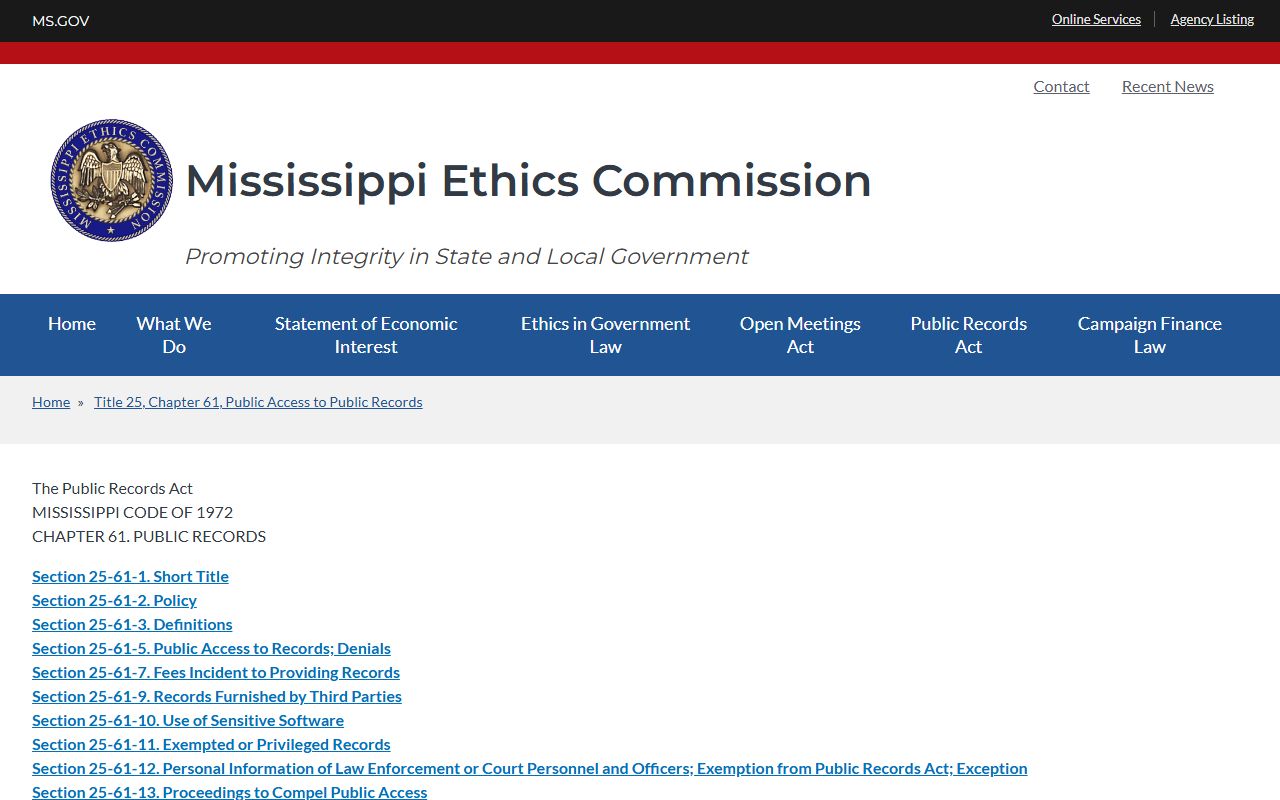
The act sets the framework for asking the sheriff or a court clerk for non-confidential warrant and jail docket information. Some material stays closed, so a request may come back redacted or denied where a statute requires it.
Custody Alerts Through VINELink
If your concern is whether someone is in custody, or you want a heads-up when custody status changes, the statewide victim notification network can help. The Mississippi service runs through VINELink for Mississippi, where you can search for an offender and register for alerts where the agency shares data.

VINELink does not replace a call to the sheriff, but it can confirm a custody status and send a notice if a person is released or moved. Registration lets you pick notices by phone, email, or text where those channels are offered.
VINE in Mississippi is coordinated by the Office of Mississippi SAVIN, which is part of the corrections system. The program is described on the MDOC SAVIN and VINE services page.
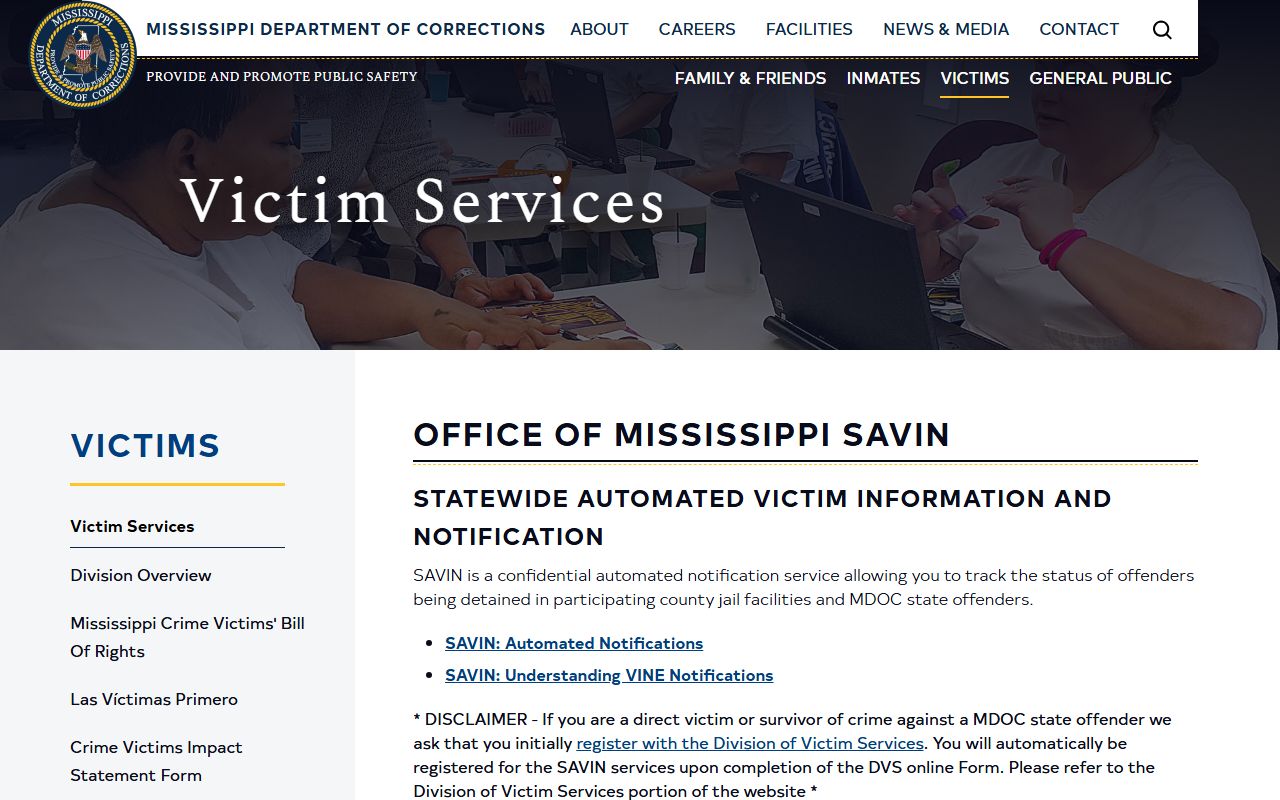
Because SAVIN draws on data from participating agencies, the depth of a custody record can vary. When an alert and a phone call disagree, treat the sheriff or the issuing court as the final word.
How to Resolve an Outstanding Warrant
If you learn that a warrant is out for you, handling it the right way protects your safety and your case. A planned response, often with a lawyer, is far better than a chance encounter with an officer. Work through these steps in order.
- Do not rely on an unofficial database. Call the court or the sheriff directly to confirm the warrant.
- Identify the warrant type: Circuit felony, Justice Court, Corinth Municipal, a Chancery bench warrant or capias, a child-support or DHS matter, or an out-of-county or out-of-state warrant.
- Ask the issuing court about any required appearance, bond, fines or costs, and whether you qualify for a payment plan.
- If surrender is required, coordinate it through the Sheriff's Office or the court. Do not attempt self-help or any confrontation.
- After the court acts or a payment is made, confirm with the issuing court and the sheriff that the warrant or capias has been cleared.
- Keep your receipts and orders, because the administrative clearing of a record can lag behind the payment or the appearance.
Important: Talk to a lawyer before you turn yourself in. Counsel can arrange a bond, line up a court date, and keep a surrender calm and orderly.
Warrant Records That May Be Sealed
Not every warrant is open to public view. A sealed indictment in a felony case is held back until an arrest, so the public will not see it ahead of time. Juvenile matters are confidential, and warrants tied to a youth-court case are not open records. Some warrants tied to an ongoing investigation can be withheld until they are served, and search warrant returns may be restricted while a case is active.
Federal warrants are a separate system and will not appear in county or state records at all. For those, the federal courts and federal agencies are the source. When a county office tells you a record is sealed or exempt, that answer is usually grounded in a specific statute, and the office cannot waive it. If you need to confirm whether a person is being held locally rather than charged, the inmate records page explains how to check custody through the jail and state systems.