
Alcorn County Arrest Records and Court Charges
An Alcorn County arrest record is the record of the arrest itself. It captures the booking event handled by the Alcorn County Sheriff, currently Ben Caldwell, whose office sits at 2833 South Harper Road in Corinth and runs the county jail. The sheriff keeps a jail docket for every person held, while the live custody roster and booking detail are covered on the Alcorn County inmate records page. The court charge record is a different thing. After the arrest, the District Attorney decides which formal charges to file, and the court clerk logs each count. That filing, not the booking, opens the criminal case.
It helps to keep the two sides apart. The arrest and booking side belongs to the sheriff and the jail. The court charges after arrest belong to the prosecutor and the court, and they are tracked through the case as counts are amended, dropped, or carried to a verdict. The full case file, with pleas, hearings, and the final outcome, lives with the court; the Alcorn County criminal court records page follows that file from charge to sentence. This page does not offer a mugshot or jail blotter database. It explains the path from an arrest to the charges that reach the court.
What an Arrest Record Tracks
Under Mississippi law the sheriff keeps a jail docket, and that docket is the backbone of the local arrest record. The Alcorn County Sheriff page sets out those duties, including charge of the courthouse, custody of the jail, and the docket itself.
The Alcorn County Sheriff page describes a four year elected office whose jailor duties include logging each warrant and the reason a person is placed in jail.
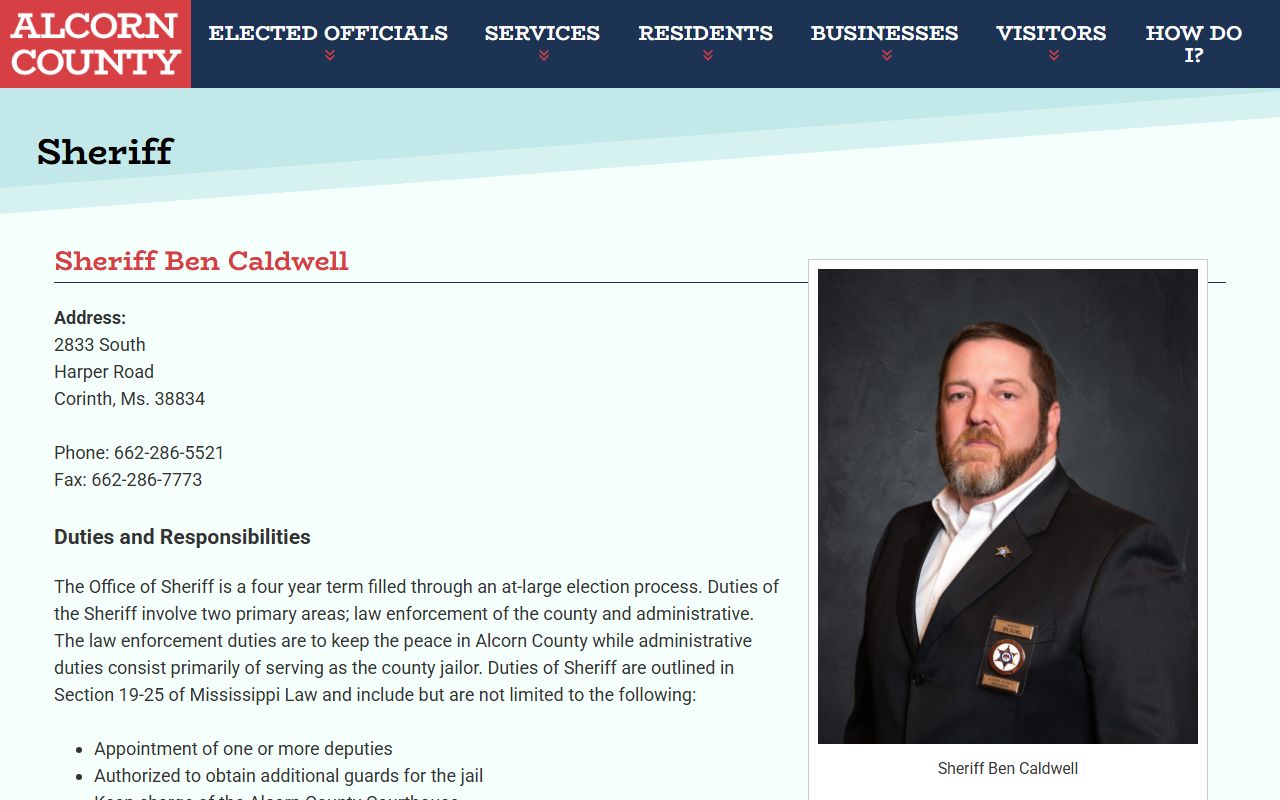
Drawn from the sheriff's stated duties, a jail docket entry tied to an arrest typically tracks these fields:
- The person's name and the reason placed in jail.
- Each warrant or writ involved.
- The nature of the writ or warrant and who issued it.
- The date and time of the arrest.
- The date and time the writ or warrant was issued.
- The crime committed.
- The authority for the confinement.
These fields describe custody, not guilt. An arrest record shows that a person was held and on what stated basis, but it does not settle whether the state will charge the case or whether a court will convict.
How to Find Alcorn County Arrest Records and Charges
Charges and their current status show up in the court case search, while arrest and booking detail comes from the jail side. For filed charges, the statewide system is Mississippi Electronic Courts, viewed by the public through PAMEC with a registered login. For the custody side, the sheriff and the correctional facility hold booking information, and local police make many of the arrests.
The Corinth Police Department page routes ticket and court date questions to the Municipal Court Clerk and lists tip and records links for the public.

- Open the Mississippi Electronic Courts public access portal and sign in to PAMEC.
- Search by the defendant name or the case number for the First Circuit District.
- Open the case and read the full list of charges as filed.
- Check each charge for its statute code, severity level, and current status.
For booking and custody status that is not online, call the Sheriff at 662-286-5521 or the correctional facility, and for a statewide picture use a Mississippi criminal history check, which gathers reported charges from courts across the state rather than from one county file.
How Charges Get Filed After an Arrest: Complaint, Information, and Indictment
The charge record begins when a charging document is filed, and that document marks the real start of the court case. An arrest puts a person in custody, but a prosecutor still has to commit the charges to paper. Mississippi uses three main charging documents, and the one used depends on the seriousness of the offense.
| Complaint | Information | Indictment | |
|---|---|---|---|
| Filed By | Officer / Prosecutor | Prosecutor | Grand Jury |
| Common For | Misdemeanors | Many felonies | Serious felonies |
| Starts | The case | The case | The case |
A complaint or affidavit often opens a misdemeanor in Justice Court or Corinth Municipal Court. A felony may begin with a preliminary matter in a lower court and then move to Circuit Court once a grand jury returns an indictment. In each path, the filed charge is the line that turns an arrest into a court case.
Charge Status and What It Means
Charges are not fixed once they are filed. As a case moves, a count can be amended, reduced, added, dropped, or dismissed, and the court record notes each change. One arrest can also produce several separate charges that each follow their own path. Reading the status of every count is the only way to know where a case truly stands.
| Status | What It Means |
|---|---|
| Pending | The charge has been filed and the case is still open and moving through the court. |
| Amended / Reduced | The charge was changed, often to a different offense or a lower level than first filed. |
| Dismissed | The court dropped the charge, so it no longer moves toward a verdict. |
| Nolle Prosequi | The prosecutor chose not to pursue the charge, ending it without a conviction. |
Charges vs. Convictions
Being charged is not the same as being convicted. An arrest and a filed charge are accusations, while a conviction is a finding or a plea that settles guilt under a far higher standard of proof. A charge record can list counts that were later reduced, dismissed, or that ended in an acquittal, so the charge alone never tells the whole story.
| Charge | Conviction | |
|---|---|---|
| Stage | Accusation | Verdict or plea |
| Burden of Proof | Probable cause | Beyond reasonable doubt |
| Public Record | Yes | Yes |
Sealed vs. Expunged Records
Charge records, like full case files, can be sealed or expunged. A sealed record still exists but is hidden from the public, with limited access for some agencies. An expunged record is treated as though the matter never happened, and access is far more restricted. Eligibility under Mississippi law turns on the charge, the outcome, and the time that has passed.
| Sealed | Expunged | |
|---|---|---|
| Visibility | Hidden from public | Destroyed / treated as never existed |
| Law Enforcement | Limited access | Very limited |
| Eligibility | Set by Mississippi statute and court order | Set by Mississippi statute, by charge and outcome |
Charge Codes and Severity Levels
Each charge is tied to a Mississippi statute, and that citation sets the offense and its level. Felonies are the most serious offenses and are heard in Circuit Court, while misdemeanors are lesser offenses handled in Justice Court or Corinth Municipal Court. Traffic and city ordinance violations sit at the lowest level. Because one arrest can generate several separate counts, a single booking can produce a felony charge alongside one or more misdemeanors, and each count carries its own statute code, level, and status in the court record.
Who Files Charges in Alcorn County
Two prosecutors handle most charges in Alcorn County. Felony charges in Circuit Court are filed and pursued by District Attorney Jason Herring, who serves the First Circuit District covering Alcorn and six neighboring counties from a Corinth office at 706 Cruise Street. City level charges in Corinth Municipal Court are handled by the Municipal Prosecuting Attorney, Robert G. Moore Jr. The arresting agency, often the sheriff or the Corinth Police Department, makes the initial charging decision at booking, but the prosecutor decides what is finally filed with the court.
Statewide Charge and Criminal History Lookups
A single Alcorn County case shows only what happened in that one court. Charges across Mississippi roll up into a statewide criminal history kept by the Mississippi Department of Public Safety, which gathers reported charges and dispositions from courts in all 82 counties. A statewide history is the right tool when a person may have charges in more than one county, while a single court search is enough when the matter clearly stayed local. Either way, the disposition on each charge, not the arrest, is what defines the outcome.
Requesting Arrest and Charge Records
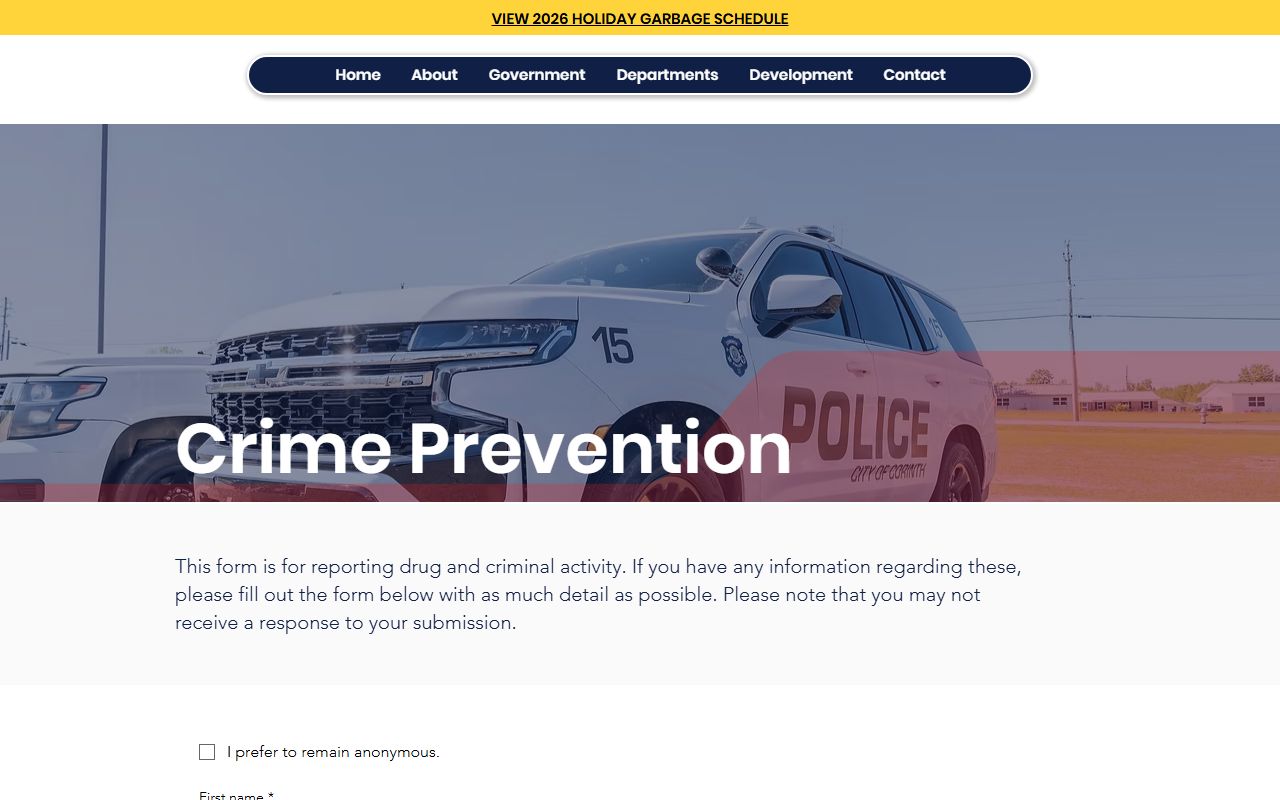
When records are not online, the public can ask the agency that holds them. The City of Corinth offers several official forms, and the police page links to each. Crime and drug tips can be sent through a dedicated form, with an option to stay anonymous.
The Corinth crime and drug tips form takes a name, contact details, and the tip itself, or it can be filed without a name.
A separate form lets residents flag a non emergency issue for follow up by the city. It asks for contact details, the type of concern, the address, and a short explanation.
The Corinth report a concern form routes the report to the right city office for review.

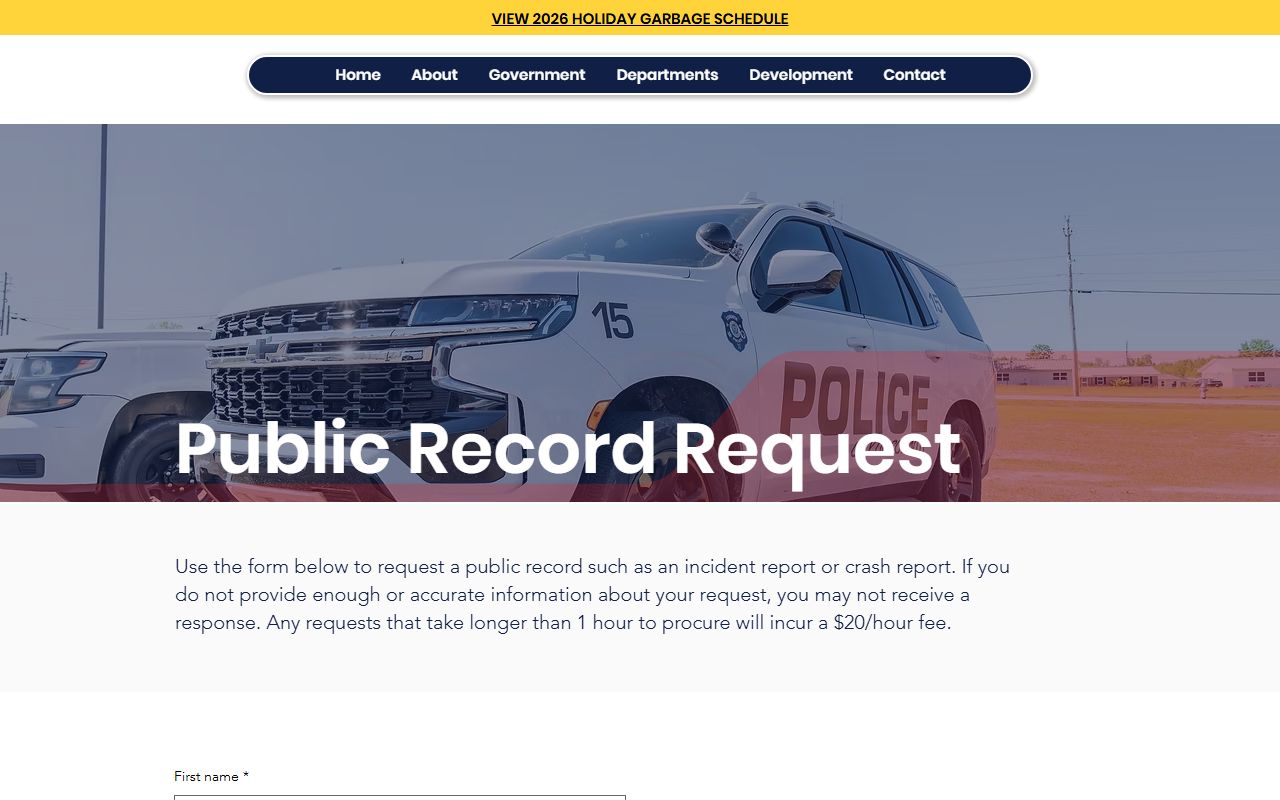
For incident reports and crash reports, the city uses a public records request form. It collects the requester's contact details and the request specifics, and it notes a fee of $20 per hour for search time after the first hour.
The Corinth public records request form is the official channel for police incident and crash reports held by the city.
For court level charge records rather than police reports, the request goes to the clerk of the court that handled the case: the Circuit Clerk for felonies, or the Justice Court or Corinth Municipal Court clerk for lesser offenses.
Background Check Considerations
A casual lookup and a formal background check are not the same. Reading a public charge record out of curiosity is fine, but using records to decide on credit, a job, a rental, or insurance falls under the federal Fair Credit Reporting Act, which sets rules on accuracy, consent, and the right to dispute. A regulated check has to run through a consumer reporting agency that follows those rules.
Important: This site is not a consumer reporting agency under the FCRA, and its information may not be used for credit, employment, tenant, or insurance decisions.
Restricted Charge Records in Alcorn County
Not every charge record is open to the public. Juvenile and Youth Court charges are restricted and should be treated as confidential unless a court order or a statute allows access. Sealed charges require court authorization before anyone can view them. Some dismissed charges and matters tied to ongoing investigations may be withheld in part. Public copies also redact personal identifiers such as Social Security numbers, financial account numbers, and the names of minor children. When a charge record is sealed, gated, or withheld, the issuing court or the agency that holds it is the right place to ask about lawful access.