
Criminal Court Records in Alcorn County
A criminal court record is the case file the clerk of court opens the moment formal charges are filed. In Alcorn County, the Circuit Clerk files all felony criminal cases and the papers that go with them, issues process, records judgments, and collects fines and restitution. The file is the spine of the case. It holds the charge as filed, the bond order, each motion, every docket entry, the plea or verdict, and the sentencing order. The charge that triggers the file is a separate record on its own, and the path from arrest to a filed charge is laid out on the Alcorn County arrest records and charges page.
Two court levels produce criminal records in Alcorn County. Felonies, the most serious offenses, are heard in the Circuit Court for the First Circuit District at the Alcorn County Courthouse, and those files live with the Circuit Clerk. Misdemeanors, traffic offenses, and preliminary criminal matters start in the lower courts: the Alcorn County Justice Court and the Corinth Municipal Court. A felony can begin in a lower court at the preliminary stage and then move up to Circuit Court once a grand jury returns an indictment. Because the levels keep their own files, the court that handled a case decides where its record sits.
How to Search Alcorn County Criminal Court Records
Most Alcorn County felony case files are now electronic. The statewide system is Mississippi Electronic Courts, and the public view it through PAMEC, which needs a login. Circuit Court in Alcorn County went live on the system on May 24, 2021, so newer felony cases can be pulled online by registered users, while older or lower-court files may still need a clerk visit.
- Register for a PAMEC account, then open the Mississippi Electronic Courts public access portal.
- Search by the defendant name or the case number for the First Circuit District.
- Narrow the results by court, case type, and filing date to find the right file.
- Open the case to read the docket, the charges as filed, and the disposition.
- Ask the Alcorn County Circuit Clerk for a certified copy when an official record is needed.
For lower-court records, call the Justice Court at 662-286-7777 or the Corinth Municipal Court at 662-286-2236, since misdemeanor and preliminary files may not appear in the circuit system. A statewide criminal history check is a different record kept by the Mississippi Department of Public Safety, and it pulls reported charges from courts across all 82 counties rather than from a single Alcorn County file. In person, the clerk's public terminal remains the fallback when a document is account gated or has not been scanned.
Stages of a Criminal Case
A criminal case moves through set steps, and each step leaves its own mark in the court record. Following the flow makes a docket easier to read, because the entries line up with the stage the case was in when they were filed.
Case flow: Charges Filed › Arraignment › Pretrial / Motions › Plea or Trial › Disposition › Sentencing
| Stage | What Happens |
|---|---|
| Charges Filed | The state files the charge by information or grand jury indictment, which opens the case file with the Circuit Clerk. |
| Arraignment | The defendant is told the charges and enters a plea of guilty or not guilty; bond terms are set or confirmed. |
| Pretrial / Motions | Counsel file motions, exchange discovery, and argue issues; the docket fills with orders, notices, and hearing dates. |
| Plea or Trial | The case ends in a plea agreement, or it goes to a jury or bench trial for a verdict. |
| Disposition | The court records the outcome of each charge: guilty, not guilty, dismissed, or otherwise resolved. |
| Sentencing | After a conviction, the judge orders the sentence, which can include prison, probation, fines, or restitution. |
What an Alcorn County Criminal Court Record Shows
A criminal case file is built from many fields, and each one answers a different question about the case. The list below reflects the data that Mississippi court clerks and the electronic case system track, so a reader knows what to expect before opening a file. For the broader set of civil, family, and probate files, the Alcorn County court records overview maps the full court system.
| Field | What It Shows |
|---|---|
| Case Number | The unique number the clerk assigns when the file opens; it ties every later filing to one case. |
| Court | Whether the case sits in Circuit Court, Justice Court, or Corinth Municipal Court. |
| Parties | The State of Mississippi as the prosecuting side and the named defendant on the other. |
| Charges | Each offense as filed, with the statute cited and the severity level noted. |
| Plea | The defendant's formal response to each charge, such as guilty or not guilty. |
| Docket Entries | Motions, orders, notices, hearings, bond actions, and any bench warrant issued or returned. |
| Disposition | The final or current outcome of each charge in the case. |
| Sentence | The punishment ordered after a conviction, including any fine, restitution, or term of supervision. |
Charges vs. Convictions
Being charged is not the same as being convicted, and a criminal court record makes that gap clear. A file can list a charge that was later dropped, dismissed, or that ended in an acquittal at trial. A charge is only an accusation. A conviction is a finding or a plea that settles guilt. Reading the disposition for each count, not just the charge that opened the case, is the only way to know how a matter truly ended.
| Charge | Conviction | |
|---|---|---|
| Stage | Accusation | Verdict or plea |
| Burden of Proof | Probable cause | Beyond reasonable doubt |
| Public Record | Yes | Yes |
Reading Dispositions and Sentences
The disposition is the heart of a criminal court record, since it states how each charge was resolved. Common terms include guilty, not guilty, dismissed, and nolle prosequi, which means the state chose not to pursue the charge. A plea of nolo contendere, or no contest, accepts the penalty without admitting guilt. Once a conviction is entered, the sentence section spells out the result. In Alcorn County that can mean a term in state custody, a period of probation in place of or after incarceration, a fine, court costs, or restitution paid to a victim. A capias or bench warrant noted on the docket usually points to a missed court date rather than a new crime, so it pays to read each entry in context.
The District Attorney and Defense Counsel
Felony charges in Alcorn County are prosecuted by the District Attorney for the First Circuit District, a seven county district that also covers Itawamba, Lee, Monroe, Pontotoc, Prentiss, and Tishomingo. The office and its duties are described on the Alcorn County District Attorney page, with a Corinth office at 706 Cruise Street and a phone line at 662-287-2486.

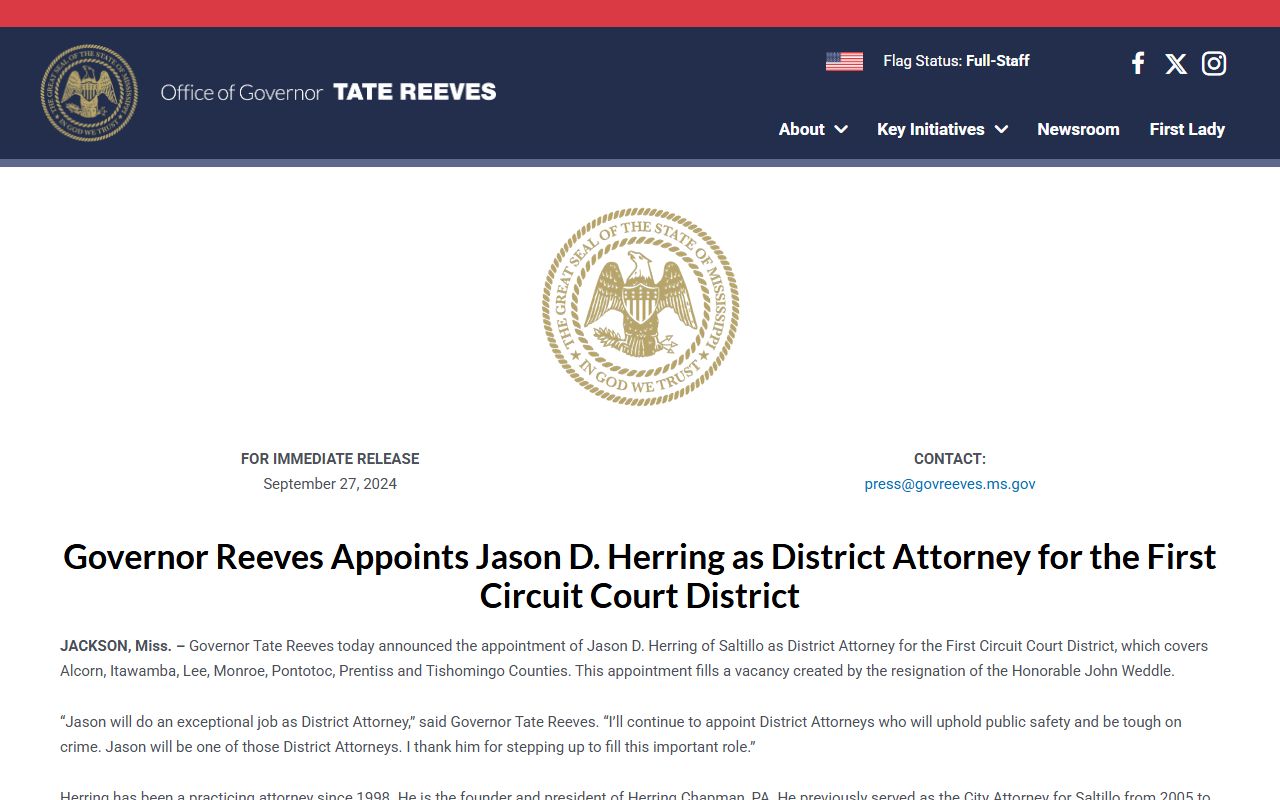
The current District Attorney is Jason Herring. A Governor's appointment release records that he was named to the post on September 27, 2024, with the term beginning October 14, 2024 after the prior officeholder resigned. The District Attorney decides what charges to bring and carries the case through the Circuit Court.
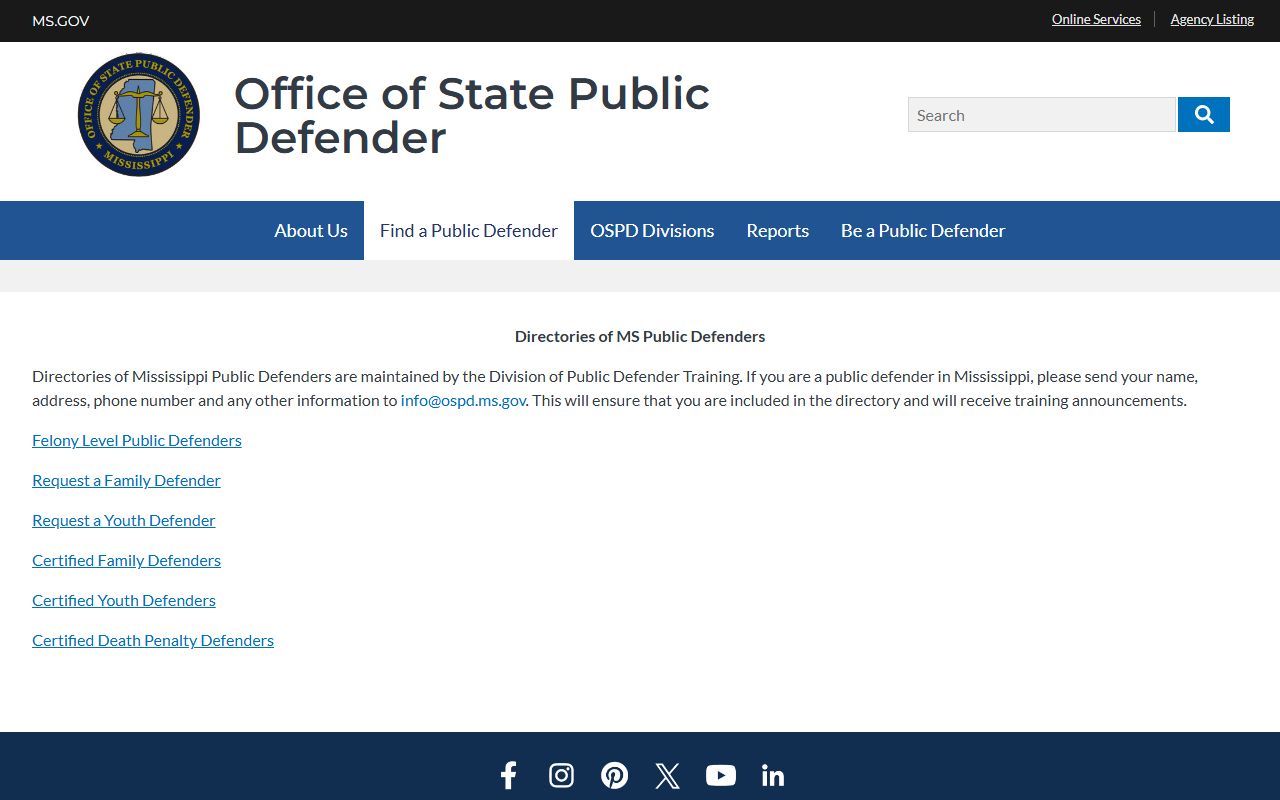
A defendant who cannot afford a lawyer is entitled to court appointed counsel. There is no central public defender office on the county site, but the Mississippi Office of State Public Defender keeps a directory. Its September 2024 felony listing for Alcorn County names Tyler Moss at 516 Fillmore Street, Corinth, and Clay Nail at 509 Franklin Street, Corinth. Both are appointed or contract counsel rather than a staffed county office, so a defendant should confirm any appointment through the court handling the case.
The full state public defender directory is the official source for these contacts and is updated by the Division of Public Defender Training.
Because the prosecutor and the defense both file papers as a case moves, their work shows up across the docket in the form of motions, agreed orders, and hearing notices.
Adult Felony Intervention Court
Some eligible felony defendants in Alcorn County are routed into the First Judicial District Adult Felony Intervention Court, the region's drug court. The program is described on the First Circuit intervention court page and serves all seven First Circuit counties. It pairs close supervision with treatment rather than a straight prison term.
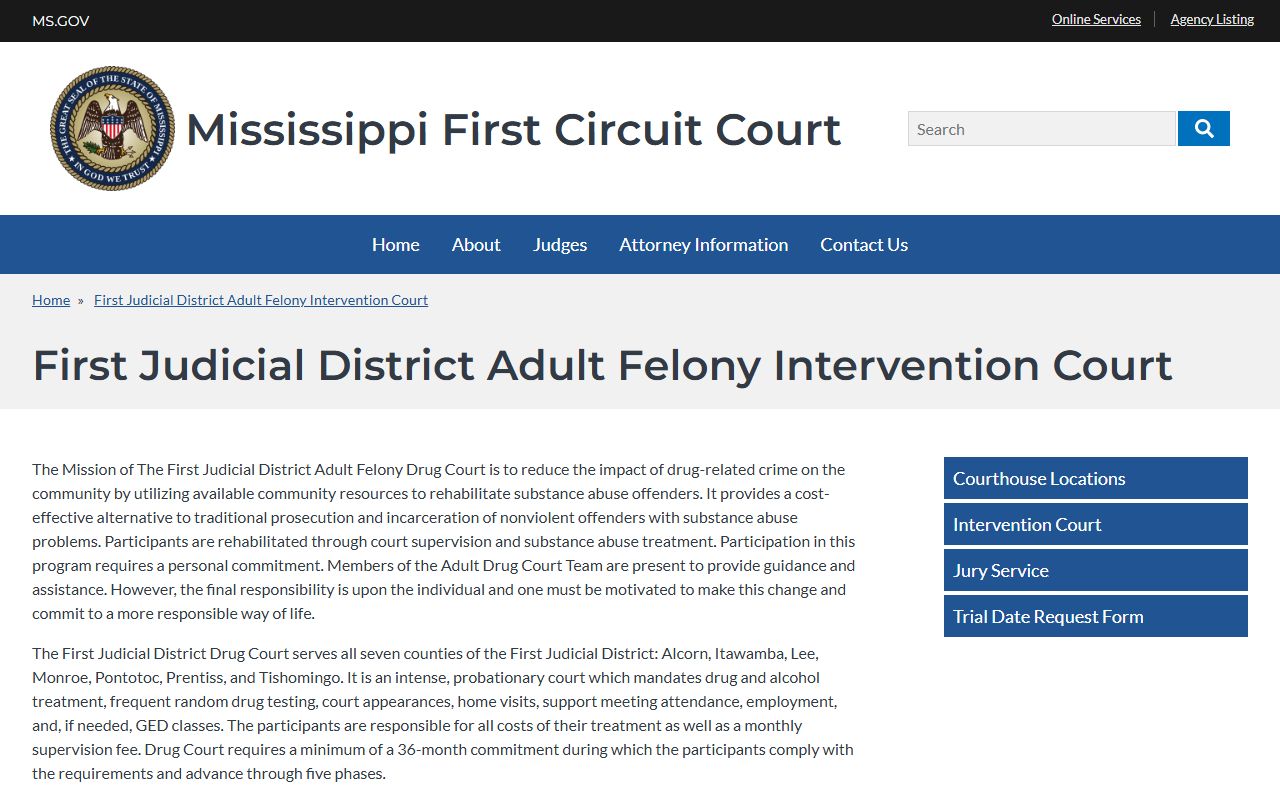
The court requires a minimum 36 month commitment across five phases, with drug testing, court appearances, home visits, support meetings, and employment or GED goals. Participants pay treatment costs and a monthly supervision fee. The listed contact is Jennifer Cummings at 662-728-4060. A case in this program still has a Circuit Court file, so its docket, supervision terms, and review dates remain part of the criminal court record.
Sealed vs. Expunged Records
Sealing and expunction both limit access to a criminal record, but they are not the same. A sealed record is hidden from the public yet still exists, and some agencies keep limited access. An expunged record is treated as though the case never happened, and access is far more restricted. Eligibility under Mississippi law depends on the charge, the outcome, and the time that has passed, so each case is judged on its own facts.
| Sealed | Expunged | |
|---|---|---|
| Visibility | Hidden from public | Destroyed / treated as never existed |
| Law Enforcement | Limited access | Very limited |
| Eligibility | Set by Mississippi statute and court order | Set by Mississippi statute, by charge and outcome |
The practical path to clear or restrict a record starts with the case itself. First identify the exact case or arrest record and the court that handled it. For a Circuit Court felony or appeal, begin with the Circuit Clerk for the case number and disposition; for a Justice Court or Corinth Municipal Court misdemeanor or traffic matter, begin with that lower court clerk. The petitioner usually needs the final disposition, the charge, the arrest date, and the agency or court identifiers before filing. If a person is eligible under state law, the petition is filed in the court with authority over the record. Once a judge grants relief, the order has to reach each record holder: the court clerk, the arresting agency, the sheriff or jail, the prosecutor, and the state criminal history repository where it applies. Expunction does not erase every private copy or news item, so the official holders act on the strength of the court order.
Public Access to Criminal Court Records
Most criminal case files in Alcorn County are open to the public. The Mississippi Public Records Act treats the records of public bodies as available for inspection unless a statute makes them exempt, and court files carry their own access rules on top of that. The practical route is to ask the office that keeps the record, which for felonies is the Circuit Clerk and for lower offenses is the Justice Court or Corinth Municipal Court clerk.
Key Statutes:
Mississippi Code § 25-61-1 - public records are open for inspection unless a specific statute exempts them.
Mississippi Code § 25-61-2 - electronic recordkeeping must not erode reasonable public access to records kept on computer systems.
Background Check Considerations
A casual record lookup and a formal background check are different things. Reading a public docket to satisfy curiosity is fine, but using records to decide on credit, a job, a rental, or insurance falls under the federal Fair Credit Reporting Act, which sets strict rules on accuracy, consent, and the right to dispute. A regulated background check has to run through a consumer reporting agency that follows those rules.
Important: This site is not a consumer reporting agency under the FCRA, and its information may not be used for credit, employment, tenant, or insurance decisions.
Restricted Criminal Court Records in Alcorn County
Not every criminal record is open. Juvenile and Youth Court matters are restricted and should be treated as confidential unless a court order or a specific statute allows access. Sealed cases require court authorization before anyone can view them. Records developed among judges and their aides are exempt as judicial work product under Mississippi Code § 9-1-38. Public copies also redact personal identifiers such as Social Security numbers, financial account numbers, and the names of minor children. Ongoing investigations and active matters may be withheld in part until the case is resolved. When a record is sealed, gated, or withheld, the issuing court or clerk is the right office to ask about lawful access.